




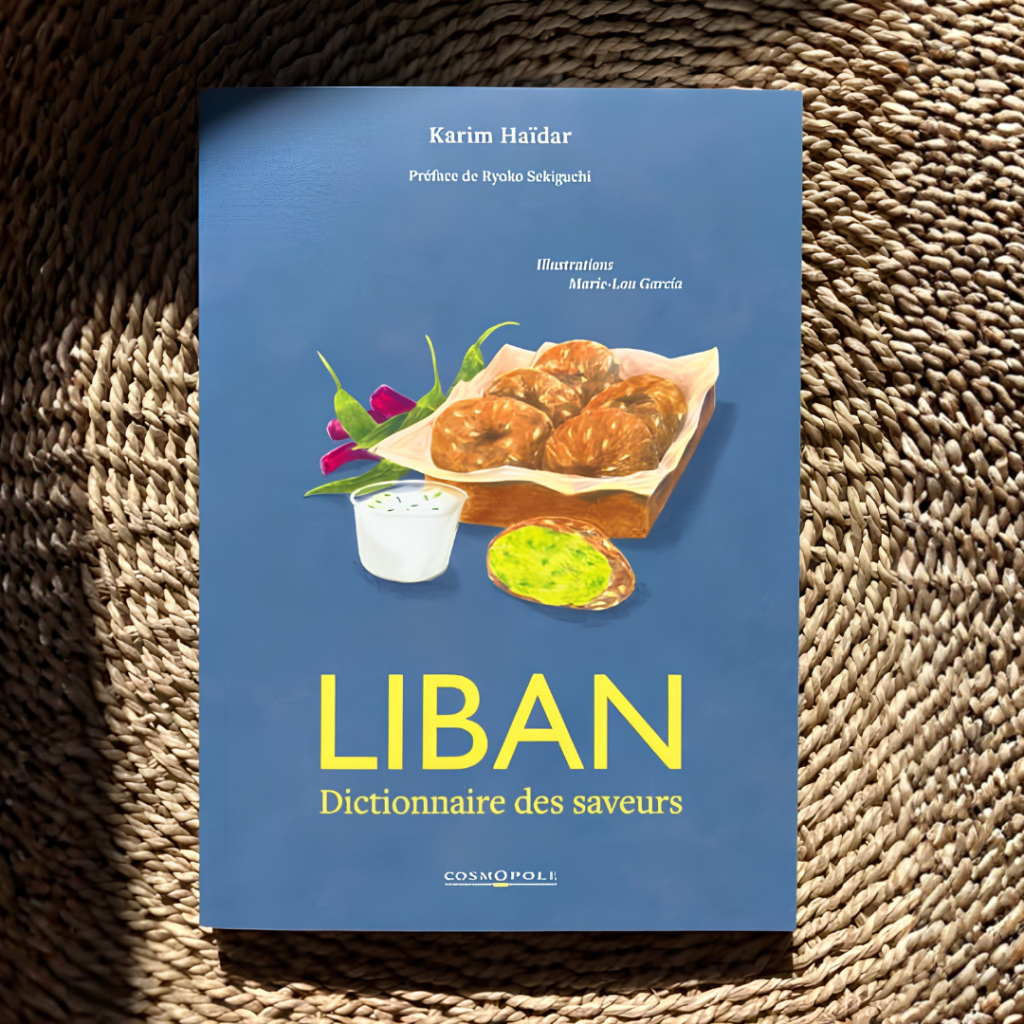
Liban: Dictionnaire des Saveurs by Chef Karim Haidar (Éditions Cosmopole) is far more than a traditional Lebanese cookbook. Through a rich and evocative narrative, the chef behind Paris’s acclaimed Sama Bistro explores Lebanese identity through its culinary heritage, going well beyond familiar dishes like hummus and falafel.
Designed as an A-Z dictionary, the book offers a unique, non-linear journey through Lebanon’s food culture. Each entry is not just a recipe, but a story, a memory, or a cultural reference that reflects everyday life, language, and traditions across generations.
Having lived abroad for over 30 years, Karim Haidar writes from the perspective of the diaspora, using food as a bridge between memory and modern reality. His work preserves a culinary heritage that has long been passed down orally, at risk of disappearing over time.
The book explores several key themes:
Food as identity and belonging
In a country with a vast diaspora, Lebanese cuisine becomes a powerful link to one’s roots. Haidar documents recipes and traditions that connect generations across borders.
Everyday rituals and culinary memory
Beyond recipes, the book captures how people eat, from simple childhood snacks to elaborate festive dishes, reflecting the rhythm of Lebanese life.
Authenticity in Lebanese cuisine
Haidar challenges the standardized versions of Lebanese food seen globally. He highlights the diversity of dishes like fattoush, which naturally evolve depending on region, season, and local ingredients.
Blending storytelling, culture, and gastronomy, Liban: Dictionnaire des Saveurs is both a tribute to Lebanon and a preservation of its culinary soul.
DISCOVER MORE COOKBOOKS